

In the heart of northwest Saudi Arabia, near the ancient oasis city of AlUla, the desert opens into something far greater than landscape, it becomes a gateway to the cosmos.
Across protected areas such as AlUla Manara Site, AlGharameel, Sharaan National Park, and Wadi Nakhlah, visitors are surrounded by towering sandstone cliffs, volcanic formations, and silent valleys. By day, it is geology and archaeology in dialogue. By night, it transforms into one of the most extraordinary natural observatories on Earth.
Here, the sky is not just visible. It is vivid, untouched, and profoundly alive.
A World-Class Dark Sky Destination
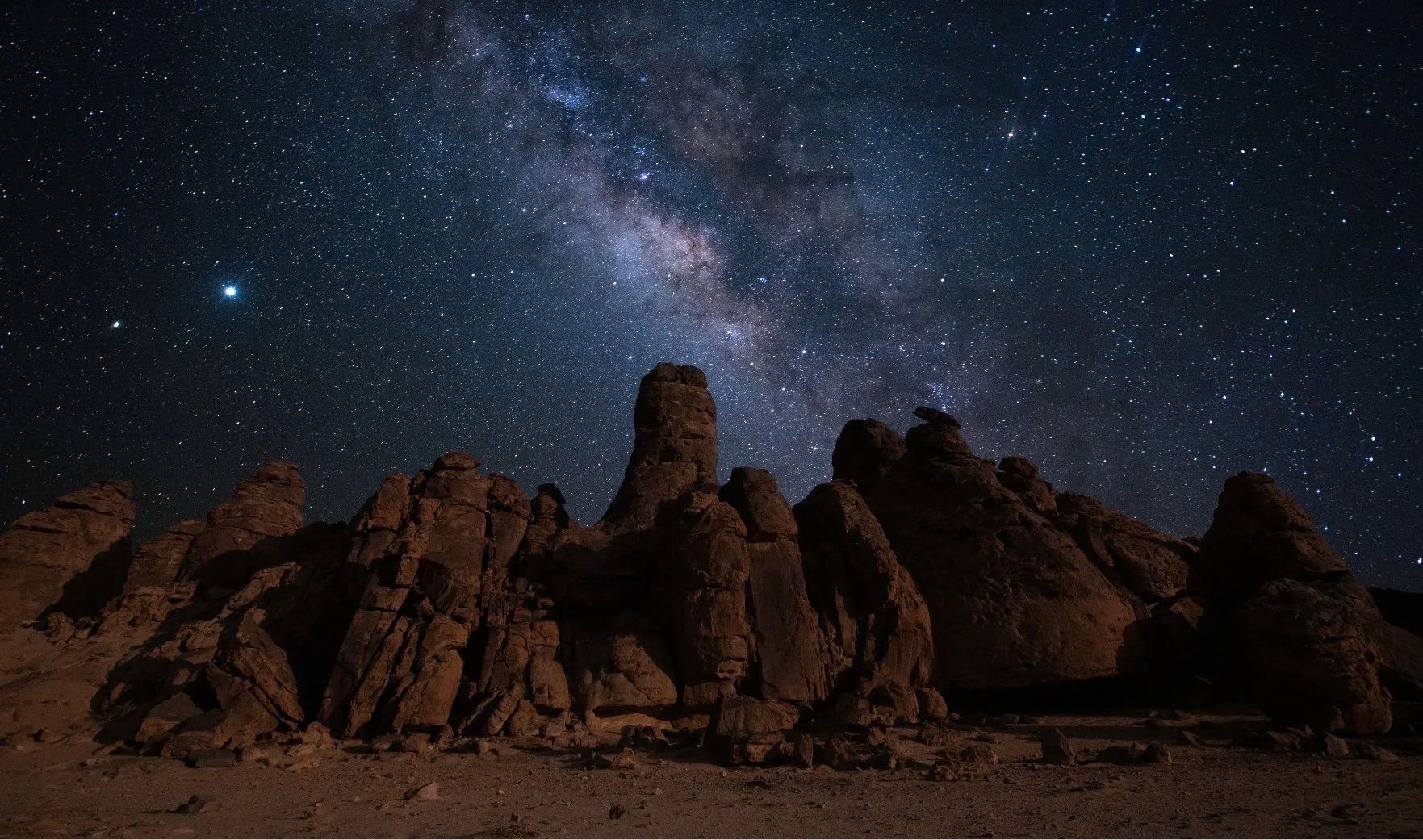
AlUla’s isolation from urban development, combined with exceptional atmospheric conditions, creates near-perfect stargazing clarity. The Milky Way stretches across the sky with striking definition, and celestial visibility is among the clearest on the planet.
AlUla has achieved International Dark Sky Park certification from DarkSky International, DarkSky the global authority on light pollution control and dark-sky preservation. The designation covers key protected areas including AlUla Manara and AlGharameel, with further expansion to Sharaan and Wadi Nakhlah strengthening its status as one of the largest certified dark-sky landscapes in the world.
Today, AlUla ranks among the top dark sky destinations globally, recognized not only for its visual quality but for its long-term commitment to environmental protection and sustainable tourism development.
Dark Sky
Why Dark Sky Preservation Matters
Light pollution affects:
Nocturnal wildlife and natural ecosystems
Human circadian rhythms and wellbeing
Cultural heritage linked to ancient navigation and astronomy
Scientific observation of the universe
AlUla’s certification is therefore more than a tourism milestone. It is a conservation framework.
To achieve DarkSky International accreditation, destinations must demonstrate strict lighting controls, long-term protection strategies, and public education initiatives that actively reduce skyglow and preserve natural darkness for future generations.
Stargazing as an Experience
Stargazing is not a passive activity, it is a curated experience that can be shaped for different travelers:
Private astronomy sessions with telescopes and expert guides
Shared desert gatherings under open skies
Luxury set-ups with dining, storytelling, and atmospheric design
Educational astronomy experiences linked to culture and heritage
Astrology sessions
Each format reveals a different layer of the desert night scientific, emotional, and deeply human.
As human settlements and artificial lighting continue to expand across the planet, covering more and more of the Earth’s surface, if not properly managed, it is not only natural ecosystems and environmental balance that are at risk, but also something far more intangible and deeply human: the simple, profound joy of looking up and seeing a truly dark, star-filled sky.
What does the sky look like from where you are right now?